Best Friends
 
Adoptable Pets Newsroom Work at Best Friends Best Friends Store


All The Good News
Special Feature

Feral Cats


Home Truths About Feral Cats


by Richard Allen, D.V.M.


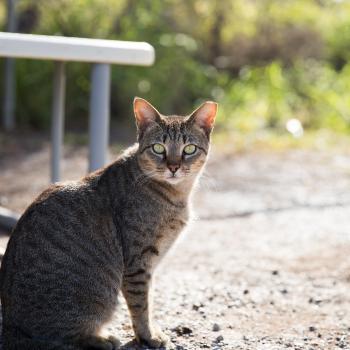
When I think of ferals, it is usually cats that come to mind, even though dogs may be feral as well. In this article, we're simply talking about cats.


How cats become feral

Kitties become feral when they miss out on socialization with humans during the first part of their lives. This period of time, when a newborn needs to recognize smells and sounds, is called the critical socialization period. A trusting mother cat allows her kittens to be handled by the human in the house and these kitties always remember people as part of their extended family.


However, there are millions of homeless cats who have not had a good experience with humans and who leave a legacy of kittens that never interact with people during this critical period. These cats are called ferals and they behave like other wildlife. Like other wildlife (and, indeed, all life) they deserve understanding and respect.


Life as a feral cat

Most problems that ferals encounter are with people. They tend to live near people because they need to scavenge to survive.


As well as eating food that we discard, they eat insects and small rodents. Some people believe that feral cats are a danger to birds. This is untrue. Hunting birds is an inefficient use of their precious energy since healthy birds tend to simply fly away. Feral cats use the minimum energy to obtain food. While house cats who are allowed outdoors do, indeed, tend to hunt birds, ferals eat leftovers and catch small ground mammals and insects.


Are ferals a nuisance?

Many people think that ferals are a nuisance and a danger to their pets, and should therefore be eliminated. Ferals do get into garbage occasionally. People also complain that they make noise when mating and fighting, and have endless kittens. This is, of course, addressed by a spay/neuter program.


Another complaint is that feral cats attack pets and spread disease to them. In fact, since ferals are wild, they prefer not to interact with us or with our pets at all. Instead, they establish their own territories - geographic areas that will support them. While some of them are certainly quite sickly, the majority tend to be in good health - a lot healthier, in fact, than some of the house cats I see. The sickliest of cats that are picked up and brought in to veterinarians tend to be abandoned house pets who are not used to looking after themselves.


Should they be euthanized?

Many people want to kill feral cats in order to get rid of them. Some even argue that this is the most humane solution to the often-poor lives that ferals live.


But euthanasia has been ineffective in controlling feral populations because, like other wildlife, the remaining ferals become more fertile and reproduce more to fill up the territory that was vacated by the euthanized cats. Moreover, euthanasia increases the spread of disease because the remaining cats have to fight it out to see who is going to inherit the vacated territory. Since bite wounds are the primary way that some of the worst cat diseases are spread, territorial fighting results in disease increase.


However, doing nothing to control the breeding of the ferals results in weaker individuals whose numbers exceed the demands of the territory.


Trap, Neuter, and Return

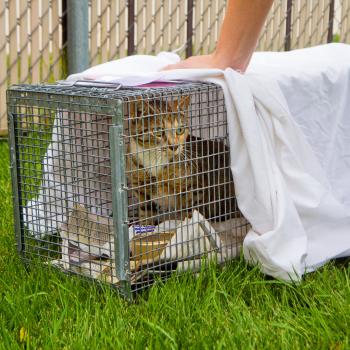
The best solution to feral reproduction is known as Trap, Neuter, and Return.


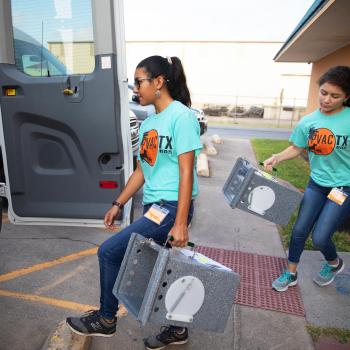
Here at Best Friends, we have an ongoing feral program in our local community. When someone contacts us about a group of ferals on their property, they are often pretty upset by the cats. So we begin by explaining that ferals are just another type of wild animal out there that depends on us and a stable habitat to survive.


After some education and some calm perspective about the situation, we trap the ferals. Then we bring them straight to the clinic and they are put under anesthesia while they are still in the trap. We shave a spot on the side of the females and do a flank spay. (The males are neutered like all our male pet kitties.)


We take their pictures and notch their ears so we don't trap the same ones again. Then we return them to their territory. We leave a big bag of cat food with the person and ask them to help us keep track of the colony. Generally speaking, they soon discover that it can be fun to live with feral friends.


1 | 2 | 3 | 4 | 5 | 6 | 7 | 8 | 9 | 10 | Next

All the Good News