Best Friends
Home
Expand Giving to Best Friends Giving to Best Friends
Expand Latest News Latest News
Expand Partners Partners
Expand At the Sanctuary At the Sanctuary
Expand Adoptable Pets Adoptable Pets
Volunteer Center
Best Friends Network
Expand Best Friends Outreach Best Friends Outreach
Best Friends Events
Expand Resources Resources
Expand You and Your Pets You and Your Pets
Expand About Best Friends About Best Friends
Expand Best Friends Magazine Best Friends Magazine


All The Good News
Special Feature

The Fight Over Ferals


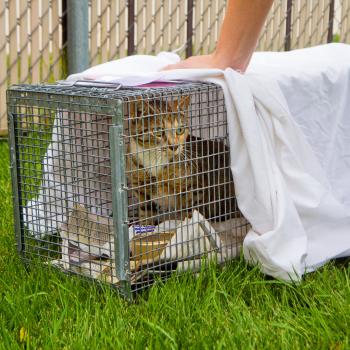
Where does trap/neuter/return (T/N/R) work? Here are a few of the many successful feral cat programs from across the country.

New York, New York

Neighborhood Cats began doing trap/neuter/return (TNR) for cats in the Upper West Side of New York City in the fall of 1999.


Recent statistics from New York City's Center for Animal Care & Control show that since 1999, the number of stray cats entering city shelters from the Upper West Side has dropped by 73 percent. (In 1999, 277 cats entered the shelter from this area; during the first six months of 2003, only 38 cats have come in.)


In the first year alone, the rate dropped by 59 percent (114 in 2000). Elsewhere in the city, the rates were generally going up during these same years.


Dallas, Texas

Since 1999, Feral Friends of Dallas has neutered over 1,200 feral cats as part of their "Race to Reduce Litters." The group found homes for 3,919 friendly stray cats.


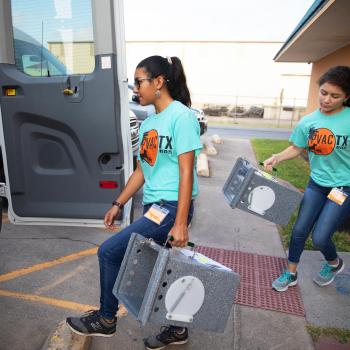
Feral Friends works with participating vets around the Metroplex, loans out humane traps and offers low-cost and no-cost sterilization for feral cats. Their "Team Feral" volunteers are specially trained to help individuals in need of extra help.


Portland, Oregon

Feral Cat Coalition of Oregon's mobile spay/neuter clinic has neutered over 15,000 feral cats across the state.


Utah (statewide)

From January 2002 to August 2003, 7,187 feral cats have been fixed in Utah through the No More Homeless Pets in Utah campaign. These were done at the Best Friends Animal Sanctuary clinic, through the Feral Fix Program, and on the Big Fix spay/neutermobile. There are 14 Trap Trading Posts across the state, utilizing 275 traps, and working with 667 caregivers 65 participating veterinarians provide spay/neuter services using a voucher available from the program with a $10 co-pay. See the No More Homeless Pets in Utah website for details.


Cape May, New Jersey

Since implementing a community-wide TNR program in 2001, Cape May Animal Control (.pdf) has reported an 80 percent drop in feral cat complaints.


San Diego, California

In 1992, San Diego Department of Animal Control euthanized 15,525 cats at a cost of $121 per cat. That year, Feral Cat Coalition San Diego, a private, volunteer organization, launched an aggressive spay/neuter program for feral cats. By 1998, the number of animals killed each year dropped more than 45 percent, at a savings of $859,221 to taxpayers.


San Francisco, California

The San Francisco SPCA has been working with feral cat caregivers to control the feral cat population since 1993. The city showed a 71 percent drop in euthanasia rate for all cats after six years of TNR.


Through their Feral Fix program, the SF/SPCA provides vaccinations and spay/neuter surgery for San Francisco feral cats, all at no charge to their caregivers. Since the program began, they have altered over 10,000 cats in neighborhoods throughout the city. Cat Assistance Team members work together to humanely trap feral cats, transport them to the Feral Fix, and provide ongoing care and socialize feral kittens before placing them in homes.


Ithaca, New York

The Tompkins County SPCA's Feral Cat Assistance Program has been one of their keys to creating a no-kill community. The SPCA's humane officers work with local volunteers to bring cats in to be fixed and return them to their home turf.


Hampton Roads, Virginia

Meower Power Feral Cat Coalition runs a monthly low-cost spay/neuter clinic and provides free assistance to the public for humane care of feral cat colonies.


Washington, D.C.

Metro Ferals was established in 1997 to promote trap/neuter/return, a non-lethal solution for the feral cat population in Washington D.C., northern Virginia and Maryland.


Chicago, Illinois

Chicagoland Stray Cat Coalition was launched one year ago. So far the group has fixed 228 feral cats at five Spay Days at the PAWS Chicago clinic. They've created an e-mail newsgroup that now has over 50 members and placed ads in area newspapers that have generated over 50 requests for information and assistance with feral cats in the first three months. The group has also established a Barn Cat Relocation project to seek places for cats who cannot stay on their home turf and recruited two local vet clinics that are willing to fix feral cats at a reduced rate.


Los Angeles, California

Best Friends Catnippers offers free monthly high-volume spay and neuter clinics throughout the Los Angeles area.


Phoenix, Arizona

AzCATs aims to eliminate cat overpopulation in Maricopa County, Arizona through non-lethal methods. Since 1999 they have helped 14,000 cats through their high-volume spay/neuter clinics for feral cats and other programs.


Maricopa County spends $61 to trap, hold, and euthanize one feral cat, versus $22.50 to spay or neuter and return a cat. Maricopa County Animal Care and Control encourages communities to adopt TNR by passing associated costs along to them.


Newburyport, Massachusetts

Merrimack River Feline Rescue Society offers "Sunday Spay Days for Feral Cats." The monthly clinics neuter, vaccinate and ear-tip cats brought in by volunteer trappers. The cats are returned to their colonies where they receive ongoing care from volunteer feeders.


Louisville, Kentucky

Alley Cat Advocates, founded in 1999, aims to provide humane treatment of unowned cats in the community. Toward this goal they have fixed over 3,039 cat as part of their trap/neuter/return program.


Honolulu, Hawaii

The Hawaii Cat Foundation works with caretakers to trap, neuter and microchip feral cats in cooperation with local veterinarians. The cats are returned to their colony environment, and caretakers continue to provide daily. They provide training and also offer mediation in caretaker/landowner disputes. To date, HCF volunteers have spayed/neutered over 5,000 cats throughout O'ahu.


Raleigh, North Carolina

Operation Catnip of Raleigh, founded in 1996, holds monthly spay/neuter clinics where a team of seven veterinarians and a support staff of 30 other volunteers sterilize up to 150 cats in a few hours. All cats also receive rabies and distemper vaccinations.


Gainesville, Florida

Operation Catnip of Gainesville, modeled after the program in North Carolina, neutered 1,575 cats in their first year. The initial goal was to sterilize 500 cats, but a generous grant from the National Humane Education Society made it possible to triple the clinic capacity.


Stanford, California

The Stanford Cat Network cares for the homeless cats who live on the Stanford University campus.


University staff, students, faculty and community volunteers humanely trap the cats so they can be neutered, vaccinated, and released back into their campus territory, where they are fed and monitored daily. Tame strays and any kittens are boarded or fostered, until adoptive homes are found. No cats are euthanized, except as warranted by a veterinarian to relieve suffering.


The program is run by agreement with the University. The Stanford Cat Network maintains a registry of the cats, establishes feeding stations, and recruits caregivers to monitor the well-being of the cats and identify newcomers before they reproduce.


The number of homeless cats on campus has declined from an estimated 1,500 at the program inception in 1989 to approximately 200 cats currently living on campus.


Around the World

Israel
The Cat Welfare Society


Italy
Friends of Roman Cats


South Africa
Kitten Action


United Kingdom
Cat Action Trust, London
Nine Lives Cat Rescue, Tyne & Wear, County Durham


1 | 2 | 3 | 4 | 5 | Next

All the Good News
 
urchinTracker