![]() |
No More Homeless Pets Forum
February 7, 2005 The Link: Animal Abuse and Violence |

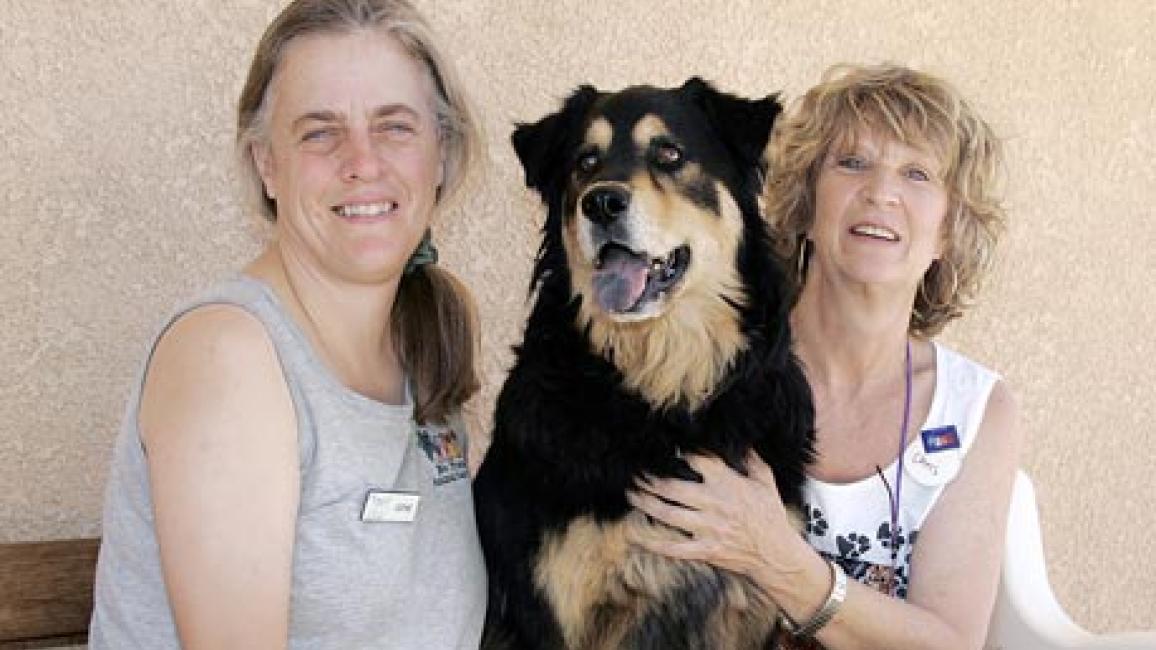
Alison Gianotto
How do we know there is a connection? Is there help for children who are abusive towards animals? How can victims of domestic violence escape abuse and save their pets too? Alison Gianotto of Pet-abuse.com is offering advice to help end the cycle of violence.
Introduction from Alison Gianotto:
The connections between animal cruelty and interpersonal violence are making headlines more than ever, but the real picture still remains largely unseen. The news media often use the sensational images of serial killers to emphasize the link. While it is true that virtually every serial killer has a history of animal cruelty, the connections in our own homes and communities often go unmentioned.This link can be found in many places: the domestic abuser who uses the family pet as a controlling device, the abused child who vents his anger and frustration upon animals to regain a sense of control, the neighborhood dog fighters instilling fear in the community by walking around with their fighting dogs.
The issue of animal cruelty goes beyond the animals themselves; it is a public safety issue. Let's spend some time discussing this connection, the options available to victims, and what our communities can do to tackle these problems head on.
Questions
Educational literature for decision makers
Changing mainstream reactions to routine animal abuse
Proving intent of dog fighting
Laws on reporting abuse cases
Preventing abuse with hands-on humane education
Effective 'citizen intervention'
Getting that dog off a chain!
Talking with children about animal abuse
When a child plays too rough
Educational literature for decision makers
Question from Marte:
Is there any literature we could get to send to public officials? That Montana case of the young man who used kittens to train his cougar dogs ended horribly. They slapped his wrist because he, "Only killed three kittens," that they could document. He admits killing 15, but even if it was one, it was a horrifying crime.I still have the letter from the prosecutor and would like to send him something to show WHY it is in humanity's best interests to put a halt to animal cruelty. Something with some documented proof that a young man such as this can easily turn into a young man who also tortures, abuses, or kills other humans.
I'd also like to send some short articles to local newspapers to raise awareness. But I need some proof beyond my own beliefs.
Response from Alison:
This is an excellent question, and one that every animal advocate faces, especially in more rural areas where animal cruelty laws are lacking and the prosecution of these cases seems to be less than rigorous. Once more prosecutors begin to see animal cruelty as a public safety issue, I believe we will have hurtled one of the most significant obstacles that face the animal welfare community... and animals. Fortunately, what you're looking for is right at your fingertips!Before I get to the links, here are the more significant statistical and case study examples:
Cases:
Patrick Sherrill, who killed 14 coworkers at a post office and then shot himself, had a history of stealing local pets and allowing his own dog to attack and mutilate them.
Earl Kenneth Shriner, who raped, stabbed, and mutilated a 7 year old boy, had been widely known in his neighborhood as the man who put firecrackers in dogs' rectums and strung up cats.
Brenda Spencer, who opened fire at a San Diego school, killing two children and injuring nine others, had repeatedly abused cats and dogs, often by setting their tails on fire.
Albert DeSalvo, the "Boston Strangler" who killed 13 women, trapped dogs and cats in orange crates and shot arrows through the boxes in his youth.
Carroll Edward Cole, executed for five of the 35 murders of which he was accused, said his first act of violence, as a child, was to strangle a puppy.
In 1987, three Missouri high school students were charged with the beating death of a classmate. They had histories of repeated acts of animal mutilation starting several years earlier. One confessed that he had killed so many cats he'd lost count.
Two brothers who murdered their parents had previously told classmates that they had decapitated a cat.
Serial killer Jeffrey Dahmer had impaled dogs' heads, frogs, and cats on sticks.
Statistics and Studies:
In 88 percent of 57 New Jersey families being treated for child abuse, animals in the home had been abused.
Of 23 British families with a history of animal neglect, 83 percent had been identified by experts as having children at risk of abuse or neglect.
In one study of battered women, 57 percent of those with pets said their partners had harmed or killed animals. One in four said that she stayed with the batterer because she feared leaving the pet behind.
You will likely find those statistics published on many websites, and if you ever lose track of them, you can find them at:
http://www.pet-abuse.com/connection/
http://www.pet-abuse.com/connection/whole.php
That said, the top two places I would recommend obtaining materials from are American Humane and the Humane Society of the United States (HSUS). American Humane is very active in educating people about the Link, and HSUS has a fantastic program called "First Strike" which strives to raise awareness about that connection.
American Humane has two fantastic printouts related to the link between animal cruelty and interpersonal violence:
(You will need Adobe Acrobat to view and print these, as they are in PDF format. If you do not have Adobe Acrobat, you can get it for free at www.adobe.com)
http://www.americanhumane.org/site/DocServer/lk_link_article.pdf?docID=603
http://www.americanhumane.org/site/DocServer/nr_Factsheet_TheLink.pdf?docID=1727
HSUS First Strike information can be found here:
http://www.hsus.org/hsus_field/first_strike_the_connection_between_animal_cruelty_and_human_violence/
Within that section, there is a link to downloadable information:
http://www.hsus.org/hsus_field/first_strike_the_connection_between_animal_cruelty_and_human_violence/download_first_strike_materials.html
Scroll down to the "Making the Connection Fact Sheets" and you will find great printouts geared for vets, humane law enforcement, prosecuting attorneys and more.
And finally, if you are interested in staying on top of newer cases where the connection between animal cruelty and interpersonal violence are present, you can visit our cruelty database: http://www.pet-abuse.com/database/search.php?human_connection=1
Comment from Claire:
A good book, in my opinion, is "Cruelty to Animals and Interpersonal Violence: Readings in Research and Application." By Randall Lockwood and Frank R. Ascione. 1998. The copy I have is a big paperback. Since it's been out for a while it might be available on www.half.com; amazon.com and other web sites that sell books discounted and used.One bit of info that I'm fond of is that veterinarians are trained, I think it is in San Francisco, to spot animal abuse and can report it to the child protection people. Nearly always when animals are being abused in the home, the perpetrator is the father (10 to one); and most always the wife and children are being abused too. You can almost bank on it!
This is such an important and interesting subject. Thanks for answering our questions.
Changing mainstream reactions to routine animal abuse
Question from Isa:
I am living since 8 years in St Maarten, a Caribbean island. With a group of animal lovers we founded an animal rights foundation since 2 years now, to battle for the animals. Like in all these islands there is a lot of violence and animal abuse. There is Pitbull and cockfighting every Sunday. How can it be stopped? Pitbull is illegal, but they are still doing it for money (nobody cares). And they all say that cockfighting is in the Latin Caribbean culture and it will never disappear. What can you suggest me to do, to stop this inhumane animal fighting in this "friendly" island?Response from Alison:
Hi Isa. Thanks for submitting a question! The scenario you describe is one of the most frustrating to deal with – when there are laws on the books, but no one seems to care. It becomes especially difficult in situations where law enforcement is culturally tied to the area and members have been part of the community for generations. Many times the perpetrators are friends of local law enforcement, and so it becomes a sort of "don't ask, don't tell" scenario (I'm not implying that this is the case in St Maarten, just observing what we have run into in the past). In fact, we have come across several illegal animal fighting busts where law enforcement agents were present and participating in the fights.There are a few angles you can work to get law enforcement to see the light:
1. Organize a letter writing campaign to the prosecutor's office, asking that these crimes be investigated and prosecuted to the fullest extent of the law. Politely remind them that tourism is the primary industry on the island, and emphasize that these brutal (and illegal) bloodsports are harmful to the island's image.
Also explain that where illegal animal fighting takes place, there are almost always other illegal activities. Because large sums of money are changing hands, there are usually weapons present at these events, in addition to drugs and prostitution. Children are very often used as "runners" during illegal animal fights, because they are less likely to be questioned by police in the event of a bust. This puts the children in danger, and contributes to a de-sensitivity to violence that they will carry with them forever.
There is a sample letter on the Humane Society of the United States (HSUS) website, located here: http://www.hsus.org/hsus_field/animal_fighting_the_final_round/sample_letter_to_prosecutors_and_judges.html
While the letter would need to be modified, since St. Maarten is not part of the United States, it should give you a good start if you get stuck. My suggestion is to make the letters focus more on the public safety issues than the animals. Letters that make it clear that this affects the entire island and its tourism trade may be more compelling than letters that details the suffering of animals (forgive me if I seem a little cynical here). In most situations, their primary concern will be "how will this make or lose us money." Money is still the great motivator, so if you can explain to them how this horrific crime will hit their wallets, you will have their ear.
You may also want to include portions of the dog fighting and cockfighting fact sheets, available here (once again, these may have to be slightly modified because of your geographic location): http://www.hsus.org/hsus_field/animal_fighting_the_final_round/
If possible, try and obtain some information about recent fights that have gone on so that you are able to speak in specifics rather than generalizations. Being able to say "there have been at least 5 cockfights in the past month in xyz city" will help drive your point home. Be sure to include the information you have on the fights, to invite authorities to investigate the locations.
2. Let law enforcement know that there are resources out there to help them! If your region doesn't have an animal control department or humane law enforcement department, or if police are called to the scene for a disturbance that turns out to be an illegal fighting event, there is information out there to help them understand how to use their investigative skills to handle fighting events.
Two free videos come to mind:
"Pit Bull Fighting - What Every Cop Should Know" http://www.hsus.org/hsus_field/animal_fighting_the_final_round/free_video_for_law_enforcement_agencies_pit_bull_fighting_what_every_cop_should_know.html
"Prosecuting Animal Cruelty and Illegal Animal Fighting" http://www.realitytraining.com/video/
Let them know these resources are available. Whenever you discuss a problem that needs attention, it is critical that you offer potential solutions as well.
3. Go to your local newspapers and news stations with this situation. Most media outlets won't resist the chance to expose a situation where law enforcement isn't doing their job or is possibly corrupt. Be sure to send them a copy of your letters to the prosecutor, and the fact sheets. Encourage them to do an investigative report on the situation if steps 1 and 2 didn't make any headway.
4. Talk to other animal organizations to make them aware of what is happening, and ask for their support in your plight. Be specific and succinct with your information. You won't need to convince them that animal fighting is wrong. Just explain that it's not being prosecuted, and how they can help. Be sure to provide them with the contact information for law enforcement agencies and prosecutors offices, so that they can quickly respond in support. Give them everything they need to be able to voice their concerns on your issue. You may even want to consider creating an informational website, hosting it on a free (or paid) server. Don't worry about the bells and whistles of website design; just give people the information they are looking for.
5. Don't give up! It may get frustrating and there may be times when you're spinning your wheels, but hang in there! It is because of groups like yours fighting for the animals that so much progress has been made over the past decade. As best stated by Margaret Mead, "Never doubt that a small group of thoughtful, committed, citizens can change the world. Indeed, it is the only thing that ever has."
Proving intent of dog fighting
Question from Patricia:
For the first time our rural county, with population of 15,000 is having reports of dog fight training. Our state law (North Carolina) states, "A person who trains a dog with the "intent" that the dog be used in an exhibition featuring fighting is guilty of a felony." Our Sheriff and District Attorney are wondering how to prove intent. Any suggestions?Response from Alison:
Believe it or not, the fact that you are getting reports of dog fighting is probably a good thing. Chances are, its been happening all along, and only now is the community aware enough about this horrible bloodsport to know that they can call to report it. Communities are becoming less tolerant of animal cruelty, and more educated about what they can do about suspected cruelty.It is important to note that there are different types of dog fighters:
- Street Fighters: Those who fight dogs in an impromptu manner, often on street corners or in empty buildings. Fighting is sometimes for bragging rights or money.
- Hobbyists: Those who fight dogs on a fairly regular basis, mostly for gambling. Hobbyists do not usually put emphasis on breeding of dogs for fighting.
- Professionals: The most serious dog fighter who train their dogs for fighting with heavy collars and chains, treadmills, and other specialized equipment. Emphasis is on breeding and record keeping of training and matches. These fights often involve large amounts of money.
Intent is frequently difficult to prove, in both human and animal crimes. Fortunately, illegal animal fighting situations usually come with a wide variety of equipment and tools of the trade. If the investigating officers know what to look for, they will often be able to collect quite a bit of evidence that demonstrates intent.
Here is a quick checklist of items you are likely to find:
- Spring-pole (used to build muscle strength)
- Carpet mill (similar to a treadmill)
- Controlled substances and medical equipment, specifically steroids, epinephrine, syringes, bags of fluids (such as lactated ringers for re-hydration), gauze bandages, and surgical needles. It is also important to note where these items are located... are they in the bathroom medicine cabinet, or are they in a box in the garage or shed? Very often these types of supplies are kept in a fish tackle box for organized portability.
- Breaking sticks (used to separate dogs). This is often just a hammer with the head removed and planed down into a wedge
- Trophies or ribbons from past fights; look for "Best in Show", "Grand Champion"
- Heavy chains on the dogs
Telltale situation:
Where are the dogs? Dogs being trained for professional fights are very often kept in a yard where they are tied out in a way that they are close to each other, but never able to reach each other. This keeps their agitation levels high, keeping them "game." When officers are investigating the scene, they should video tape (or at least photograph) the premises. When they look at the area where the dogs are tied out, is there evidence that the dogs have been in that position for a while? Is the ground worn down to the dirt in circles around the stake? Observations like these will help prevent a defendant from claiming that the dogs were only spaced out like that temporarily for an innocent purpose.
Be sure that you have access to a knowledgeable veterinarian who has worked with dog fighting cases before. An experienced vet will be able to examine the dogs and make a determination as to whether or not the dogs have been used in fights. Multiple wounds and scars on the head, neck, legs, face, chest and ears of the dogs are an indication that they have likely been used repeatedly in illegal animal fighting, and can help defeat the potential defense that the dogs just got into a tussle or two.
While cases of street fighting and hobbyist dog fights may be harder to gather evidence on, the medical evidence gathered by the veterinarian will be immensely helpful in making the case.
Remember that in animal fighting cases, you're not looking for one piece of evidence to make your case. It is the preponderance of evidence that will get your conviction. A spring-pole is not illegal to have, and the defendant can easily claim that it was an innocent toy. However when you combine the evidence of the spring-pole with the carpet mills, the heavy chains, the controlled substances, the position of the dogs in the yard, the medical equipment and the type of scarring on the dogs, you suddenly have a fairly compelling case. The entire collection of paraphernalia and other evidence coupled with the condition of the dogs is what will show the jury that this person was deliberately training the animals to fight. Expert witness testimony will go a long way in these cases as well, so if your city can afford it, it is money well spent. If you're able to use an expert witness, always try to bring them in at the beginning of the case, so they are familiar with the situation and the animals before it comes time to go to trial.
Of course, all of this pivots on good police work. Once the evidence has been collected, the normal chain of custody rules must be adhered to, lest the evidence be deemed inadmissible in court.
Also be sure to have your law enforcement department order a free copy of "Prosecuting Animal Cruelty and Illegal Animal Fighting". This video goes into more detail about how to secure and document the scene, the equipment to look for, and the information veterinarians can use to help make compelling cases. The video offers images of the types of equipment that can be found as well, which may be helpful for officers that have never experienced a dog fighting bust before (http://www.realitytraining.com/video/).
I would also suggest ordering a free copy of Humane Society of the United States' (HSUS') The Final Round video "Animal Fighting: What every cop should know": http://www.hsus.org/hsus_field/animal_fighting_the_final_round/
And most importantly, remember that there are people and organizations out there that are willing to help! If you run into specific questions or challenges, don't be afraid to reach out.
Laws on reporting abuse cases
Question from Linda:
Are vets in all 50 states required to report to law enforcement if they see evidence (injuries, etc.) that indicate a dog is being used for fighting? And what about for signs of other types of abuse? I can't recall if this information was included on www.pet-abuse.com.Response from Alison:
Reporting of suspected cruelty to animals is specifically required in only a few states: West Virginia, Minnesota, and Alabama. Other states (Arizona, Wisconsin, and California) only mandate veterinarians to report suspected abuse related to dog fighting. Some states (Idaho, Pennsylvania, New Jersey, California, and Arizona) encourage reporting abuse by providing immunity for veterinary professionals who make good faith reports.While the knee jerk reaction is to make veterinarians mandatory reporters, the vets themselves are faced with many challenges in that scenario... liability, loss of clients, fear that nothing will be done about the abuse anyway, and so on. For a wonderful article that deals directly with these issues, visit: http://www.animaltherapy.net/Vets-abuse.html.
Related Links:
http://www.vetsurgeonsBoardwa.au.com/0302_02Abuse.html
http://www.vin.com/VINDBPub/SearchPB/Proceedings/PR05000/PR00023.htm
Preventing abuse with hands-on humane education
Question from Carolin:
I am about to finish a master's degree in humane education and for my final project I would like to develop a violence intervention program for abused and neglected children that could be implemented at animal sanctuaries around the country.The reason why I have chosen this project is because I strongly believe that we need to intervene as early as possible to break the cycle of violence. I regard the rescued animals as ambassadors of kindness and forgiveness and I hope that interacting with them will open the children's hearts and minds to learning compassion and respect for all living beings. At the same time I hope that the program will bring healing to their own lives. Having in-depth experience in this field, do you feel that such programs can really make a difference?
Response from Alison:
The short answer to your question is YES; I absolutely do believe that this type of intervention, when properly developed and applied, can be effective. Now for the longer version...Including humane education as part of regular school curriculum would help all children learn appropriate behavior, not just those fortunate enough to come from stable, loving homes. That said, it is critical for high risk children such as those who have been abused.
When children learn to treat animals well, they are more apt to treat people well. If children are allowed to express their frustration and aggression by abusing animals, they will learn to express it on other people as well, perpetuating the cycle of violence and opening the doors to a future life of child abuse, domestic abuse and other interpersonal violence.
"According to research, one of the causes of aggression toward both animals and people is inability on the part of the aggressor to read the signals being given off by the other party. He or she (usually he) reacts violently because he misinterprets the intentions of the other person or animal. Understanding animal behavior and nonverbal communication are topics for humane education. Another cause of violence is lack of empathy. Without the ability to mentally put himself in another's shoes, a person sees others as objects instead of feeling beings – and abuse becomes easy. Thus the development of empathy for others, human and nonhuman, must be an integral part of humane education." Source: Violence Link Research and Humane Education by Elizabeth Gredley, http://www.cfhs.ca/humaneeducator/HE1999-1/he99-1p1.htm.
To address your particular aspect of Humane Education, specifically intervention programs for at risk or high risk children, it is important first to understand the basics of why animals are often used in counseling programs, and the specific benefits they provide to the healing process. (Since you have almost completed your master's degree, you are likely already aware of these points, but I will touch on them briefly for the benefit of other readers.)
Counselors often begin with animals in cases of profoundly abused children because animals offer unconditional love (something that has often been lacking in the lives of these children), and because most children are naturally drawn to animals.
One of the consequences of neglect and abuse is the loss of a child's ability to trust. Through the process of learning to care for animals, children learn to trust the animal not to hurt them, and eventually begin to trust the counselors not to hurt them. Through positive interaction with animals and counselors, children coming from environments of physical or sexual abuse learn about "safe touching", and can begin to overcome their fears of physical contact that have resulted from years of abuse. From there they can begin to apply these trust concepts to others, and progressively learn how to form healthy relationships.
When humane education is properly applied, the benefits extend far beyond promoting loving relationships with animals and empathy in children. One example that quickly comes to mind is a humane education program using horses to help at risk children. In this program, they must first learn to take care of the horses, and only then are they permitted to ride them.
This paradigm is used in many humane education programs, and is effective on multiple levels. Children learn how to care for the animals, and begin to form trusting relationships, as we have already discussed, but a good humane education program also helps develop empathy, respect, sensitivity, personal responsibility, community responsibility, self-control, self-worth and self-esteem. They also begin to understand the concepts of a positive feedback cycle: when the child treats the animal well, the animal gives them more attention. This is especially relevant in situations where a child is accustomed to behaving badly and acting out as a way to get the attention they are being routinely denied.
I mentioned personal responsibility and community responsibility. In the paradigm mentioned above, children begin to understand that they are accountable for their actions (or lack of action) and that there are consequences if they do not fulfill their responsibility, encouraging personal responsibility. Additionally, because the children stay over on the horse ranch and are involved with daily chores, they are taught community responsibility. They perform a contributing and positive role in the community, and are able to enjoy the rewards of being a productive member of that small society.
When you're planning your humane education program, it is so important to remember that many of the issues that surround victims of abuse are interconnected. When children recognizes their responsibility and meet the expectations placed upon them, it directly impacts their self-esteem, self-worth and self-image. When a child learns empathy, it impacts their sensitivity. When a child feels a sense of personal and community responsibility, they become more confident and proud of their accomplishments. All of these elements should be addressed in creating an effective humane education program, and I strongly recommend involving other health care professionals if at all possible. Abuse counselors, social workers and psychologists will be a true asset to your program, and their hands-on experience with abused children will be invaluable to you.
Fortunately, there are many wonderful humane education programs out there, and I encourage you to check out some of the programs listed in the First Strike interventions program directory to help you develop your own.
Listing of programs:
http://www.hsus.org/hsus_field/first_strike_the_connection_between_animal_cruelty_and_human_violence/violence_prevention_and_intervention_programs/
http://files.hsus.org/web-files/PDF/First_Strike_Directory_2004.pdf
Additional information on starting a program:
http://www.cfhs.ca/humaneeducator/HE2003-1/he03-1p1.htm
http://www.cfhs.ca/humaneeducator/HE1996-2/he96-2p5.htm
One important factor with any intervention based program is that the success rate can be hard to quantify in meaningful numbers. Set realistic goals, and set standards by which your successes and milestones are determined early on in your program; and remember that Rome wasn't built in a day. Expect your program to evolve and change, and be sure that your plan gives you some "wiggle room" for growing pains.
On a final note, I have to thank Shanen Aranmór for additional information in this reply. Shanen is the director of Wellness at Waldorf College in Iowa, a counselor to sexual abuse victims, the proud "mother" of rescued racing greyhounds, a Pet-Abuse.Com Board Member... and, I am proud to say, my sister.
Comment from Christine:
Our family has just completed training to assist with children in foster care, many that have a history of animal abuse. The current fostering system has no knowledge to impart on future foster parents regarding animal abuse, such as what to watch for, how to avoid abuse, etc.All foster parents need to do educational training in various fields every year. Our group would like to offer training to other foster parents about preventing and stopping animal abuse.
However, at least one or two of us would need to be trained or have someone come in to give the training. Does anyone have any resources on how we might put this all together? If so, please write the forum moderator at NMHPforum@bestfriends.org and ask to have your contact information passed along to us. Thank you!
Effective 'citizen intervention'
Question from Bette:
Do you have any tips for how an 'ordinary citizen' can respond when they see animals being abused? An ideal response would cause the abuser to alter their behavior and outlook, without angering the offender. For example, one time a couple brought their dog for an initial exam at the vet clinic where I work in the front lobby. While they were waiting to check out, the dog was whining and acting energetic and antsy. The man hit (spanked) the dog on the butt and verbally reprimanded him. We're used to our clientele cherishing their animal companions, not striking them just for being anxious to go! Without thinking, I said in a very authoritative tone, "We don't allow that here!" Well, actually, I was too upset to remember precisely what I said, it might have been, "That's unacceptable!" Either way, they both got very offended, said it was none of my business, and never came back. I can hope that even though they acted that way to my face, they went home and thought a little harder about how they were treating their friend. My fear is that I didn't do the dog any good. Any advice?Response from Alison:
Dealing with pet owners is often challenging. Just as no parent wants to be told how to raise their children, most pet owners don't want to be criticized on the way they handle their pets. This situation is actually somewhat similar to the tethered dog question that was asked earlier this week; and the pet owner's reactions will vary. Some people just won't listen, no matter how you approach them. On the upside however, you will probably find that most pet owners, when approached in a non-critical and friendly manner, will be receptive to learning more about their pets.The toughest part for you may be stifling your gut reaction to be stern and upset with them. After you have a handle on that, everything else is relatively easy! Since you work in a vet clinic, approaching people about their pets will be even easier for you. Keep a few brochures of local obedience classes and dog training tips at the reception desk. If you see another situation like that, rather than getting upset with them, you might try politely recommending an obedience class for their pet. This applies even if the dog has not done anything wrong, as was the case in your situation, because most good obedience classes teach the pet and the owner. In your scenario, the obedience classes would actually be more for the owner than for the pet, but there's no reason to mention that to them.
The dog training behavior handouts can be as detailed or broad as you feel will be effective. Just be sure to put heavy stress on positive reinforcement, and make it clear that negative reinforcement does not have to (and should not be) painful to the animal. If you have a behaviorist handy, ask them to help you put together this handout. If not, good base information can be found at http://www.dogmanners.com/punishment.html. You may wish to simplify some of the terms and concepts mentioned on this website, but it should get you started.
It may take some practice to train yourself not to "freak out" when you witness these situations, but it's important to remember that if the pet owner's behavior is inappropriate, but NOT criminal, your ability to keep cool will give you a much better chance at improving the animal's life. If the behavior is criminal, call your local department of animal control, humane law enforcement department or the police to report it immediately.
If you witness criminal animal cruelty, try to find a non-confrontational way to get the information you need to be able to report it. Several years ago, while visiting my local dog beach, I came across a dog without a collar that was barely more than skin and bones. I happened to have half a roast beef sandwich with me, so I gave it to the dog, who quite literally inhaled it. When I went back to my bag to see if I had any other food I could give the dog, a man came running up to me, yelling at me not to feed his dog.
Now, I will interrupt myself here and mention that my reaction to this situation was not the most effective. I quickly snapped back at him "Well someone has to, since you're clearly not!" It escalated from there. He told me that the reason the dog was so skinny was because he had just rescued it. I asked for the name of the shelter he adopted it from, making it clear that I would report him to humane law enforcement if his story didn't check out. He then quickly changed his story and told me that that the dog was so skinny because it had recently undergone brain surgery. I replied that I was unaware that accepted post-operative care for brain surgery was starvation. (I told you... I did not handle this well.) I asked him for his vet's name, brandishing my cell phone. He was evasive and continued to lie to me, changing his story with one poor excuse after another.
I truthfully cannot remember how the altercation ended (I think my cell battery was dead), but I wound up back on my beach blanket, shaking with anger, and the man walked further down the beach. My husband, bless his heart, had witnessed the argument, and while I was composing myself on the blanket, he disappeared for a minute or two and then returned with a small slip of paper with six letters written on it. Yep... you guessed it. He wrote down the man's license plate number.
I relayed this story for several reasons, the first of which is to demonstrate exactly how not to handle a situation. By confronting him, I put myself in danger and accomplished absolutely nothing on behalf of the animal. My husband, on the other hand, who had not exchanged a single word with this man, was able to quietly obtain the information we needed to be able to report him. His reaction was the better of the two, since it was not only safer for everyone involved, it also yielded something useful by which we could actually make a difference in the dog's life.
Fortunately, I have since learned better techniques for these situations, but it is very easy to find yourself caught up in a situation like this one, especially if you're an outspoken loudmouth like me. Your frustration, anger and outrage will only escalate the confrontation, so it is critical that you keep a clear head.
Ultimately, there is a time and a place for everything. Your question related to spanking, which may or may not be considered criminal, depending on where you live. However, I cannot express enough the importance of allowing the authorities to handle the situation if you have witnessed a violent animal crime. As we have discussed, animal abuse has many close ties to human violence. You need to recognize the fact that animal abusers can be dangerous to you if you attempt to confront them. As animal advocates, we must place value on our own safety as well, for if anything were to happen to us, we would be unable to continue the work we do to help animals. You will have to use your judgment in these situations, but be sure to be as careful as possible and always err on the side of caution.
Getting that dog off a chain!
Question from Lorie:
My neighbor leaves his dog outside with a short chain and a plastic dog house. The dog usually gets tangled around the doghouse, causing it to turn upside down, leaving him with no shelter. I rarely see him being fed or watered. What can I do? I've tried talking to the owners, but they seem unresponsive so far.Response from Alison:
This is a question that comes up almost every week, so you're not alone in your concerns. When dealing with neighbors, it is always best to try to resolve things peacefully and amicably first, which it sounds like you're already trying to do. Naturally, one of the key points is to make sure that your approach is positive, and that you don't come off sounding critical.The primary goal here is to get them to bring their dog inside, however they may not be willing to take that step right away. It can also be awkward (not to mention counter productive) to knock on someone's door and lecture them about the evils of leaving a dog outside all day and night. So instead, you may want to try a softer approach. Tell them how much you love dogs, and how much you would like the chance to play with their dog a few times a week or take it for walks. If you make it seem more like they are doing you a favor by permitting this, it can sometimes open the doors to further discussions and you may end up being able to convince them to bring their dog inside later down the line.
This is one of those scenarios where you will usually get more flies with honey than with vinegar. By seeming grateful for the chance to spend time with their dog, you lower their defenses, and you may even be able to help them appreciate what a great dog they have. Very often when dogs are adopted or purchased, they are given lots of attention. When the novelty of the new pet wears off, they are condemned to exile in the backyard. If you are able to spend some time with the dog, you will often be able to form a friendly relationship with the dog's owners, and help them rekindle their affection for the animal.
Neighbor's reactions to these approaches vary widely, so it's hard to predict exactly what your neighbor will do; but there are success stories that have come out of this approach. In some cases, the dog's owners changed their ways and brought the animal inside. Other times, the concerned neighbor simply continues playing with the dog or walking it; the owner isn't objecting, but they are also unwilling to rethink their position. In some cases, the concerned neighbor has even wound up adopting the dog and becoming friends with the neighbor.
There are some excellent tips on how to talk to people about their tethered animals on http://unchainyourdog.org/. The link also provides suggested alternatives to tethering, such as traditional fencing, electric fencing and dog runs. If you can get the neighbor to discuss this with you and it is clear that bringing the dog inside simply isn't going to be an option, it may help if you offer to assist them with building or installing one of the alternatives. You'll find more information at http://www.unchainyourdog.org/Talking.htm.
You will have to gauge their reaction to see if it would be appropriate to do so, but there is a powerful printable flyer that you can give them or leave on their doorstep located here:
http://www.helpinganimals.com/pdfs/Miraclebackyarddog.pdf
If they are completely unreceptive with all of the approaches suggested on http://unchainyourdog.org/ and you are lucky enough to live in an area where tethering is illegal, your only option may be calling animal control or humane law enforcement to have the owner cited. Also check to see if your town has sheltering laws. If the doghouse is constantly being overturned, you may be able to get humane law enforcement involved that way, even if there are no provisions against tethering in the local laws.
You can find out more information on the states that currently have some measure of tethering legislation by visiting http://www.helpinganimals.com/pdfs/teathering%20_rvsd.pdf and http://www.helpinganimals.com/a-tether.html. If your area does not prohibit tethering, you may wish to look into what it takes to get anti-tethering legislation passed in your town. Go to http://www.unchainyourdog.org/LawsHowTo.htm.
You mentioned that you rarely see them feed or water the animal, and while that is certainly a serious situation, it is important to look at the entire situation before jumping to any conclusions as to whether or not the dog is actually being deprived of food and water. What is the condition of the dog? Does he or she appear skinny or malnourished? If not, there is a good chance that they may be feeding and watering the animal during times of the day when you may not be watching. American Humane has a guide on evaluating the situation on their website at http://www.americanhumane.org/site/PageServer?pagename=hw_help_animal_step1. If the dog does show signs of malnourishment, call your local department of animal control or humane law enforcement immediately.
For additional Information visit http://www.dogsdeservebetter.com/.
Talking with children about animal abuse
Question from Jean:
It seems like most of the time when children abuse animals, they do it without letting any adults know about it. From what I read, it also seems to be somewhat addictive. Both statements could also be made about drugs and alcohol. Do we approach kids the same way to talk about animal abuse as substance abuse? How will we know that we need to address helping someone not to abuse animals if we don't know they are doing it?Response from Alison:
Lots of great points in this question! Its true that many children abuse animals without letting adults know about it, which is exactly why we should not limit ourselves to talking with other adults. Children will often tell their friends about what they have done, which means that lines of communication have to be established to bridge that gap.School counselors can be extremely effective in this capacity, since children sometimes confess things to counselors that they will not tell their own parents. We have encountered many cases where it was discovered that the child had abused animals because they told their friend, and the friend told their guidance counselor. Guidance counselors and teachers are in a position to be incredibly effective to children, yet they remain a resource that is not tapped into enough. Many guidance counselors receive no training on how to handle reports of animal cruelty, and many have never been taught about the connections between animal cruelty and interpersonal violence. This seems tragic, since a child who is abusing animals may well be doing so to vent their frustration and anger that stems from violence in their home. Parents should take the time to meet with their child's teachers, coaches and counselors, and make it clear that they invite dialogue.
Parents also need to make sure that they have open relationships with their children's friends, and their friends' parents. Sometimes the friend or classmate of a child who has abused animals may tell their parents, often because they themselves feel that what their friend did was wrong, and they are not sure how to handle it. You don't have to be best buddies with the parents, but at least establish communication with them and be sure to let them know that your door is always open if there is anything they wish to discuss. I am a firm believer that it truly does take a village to raise a child. The more involved parents can be with the people in their children's lives, the more informed they will be about potential problems.
I don't know that I would classify the continuation and escalation of animal abuse as an addiction, per se. Animal cruelty is usually an indicator of something else happening in the child's life. The abuse continues because of the trouble in the child's life continues. People drink and do drugs to feel better and to escape, and animal cruelty often fills a similar role in a child's life. It may help clarify if we highlight the reasons why people abuse animals.
While the exact reasons for intentional animal cruelty may vary, nine typologies have been identified by Kellert and Felthous (1895, 1122-1124).
- to control an animal
- to retaliate against an animal
- to retaliate against another person
- to satisfy a prejudice against a species or breed
- to express anger through an animal
- to enhance one's own aggressiveness
- to shock people for amusement
- to displace hostility from a person to an animal
- to perform non-specific sadism
Reference: Kellert, S.R. and A.R. Felthous. 1895. Childhood cruelty to animals among criminals and non-criminals. Human Relations 38:1113-29.
In many of these typologies, we see recurring themes: retaliation, control, shock, frustration and anger. Children in unstable or violent homes go through all of these emotions and then some, and animals are an easy target. Additionally, children who are bullied at school may seek an outlet for their frustration. If you discover that your child is abusing animals, it is important that you attempt to seek the source of these feelings.
With regard to how to speak to your children about animal abuse, approaching it the same way you approach substance abuse is a good way to go. If the child has been raised around animals and has been taught to love and respect them, chances are your conversation would not have to be a long one. Children tend to be predisposed towards loving animals, so if they have had the benefit of a home environment where that love has been nurtured and encouraged, they will often make it clear that they know that animal abuse is wrong. Be sure to tell them that they should not be afraid to tell a trusted grown-up if they witness animal abuse.
There are suggestions for ways to get children involved with animals to encourage compassion located at http://www.pet-abuse.com/prevent/children.php. Also a wonderful article by the ASPCA which discusses different ages and approaches for talking to your children about animal cruelty can be found at http://www.aspca.org/site/PageServer?pagename=kids.
Comment from Gail:
Just today I read my son a story relating to your topic. The Bernstein Bears The Bully tells the story of a child who is a bully and how a brave victim stands up to her after seeing the bully throw stones at a baby bird. While the 2 children await their visit with the principal the bully breaks down because she fears her physical punishment at home. I was so thrilled that author included that the bully was protected and received in school punishment and was being cared for by the school psychologist. Maybe others would like to know that this book is available.When a child plays too rough
Question from Charlene:
My daughter is a good girl, very nice, very tenderhearted... usually. For some reason, however, she is very rough with two of our three cats and treats them in a manner I feel is inappropriate. For example, she'll swoop them up off the floor and up into the air without warning (preferably when the cat's peacefully sleeping); hang onto them with a death grip when they clearly want down and are getting ticked off; hold them upside down in the air at arm's length until they are ready to rip her face off, then toss them with an almost disdainful manner so they land four or five feet away on their feet, but clearly disconcerted, shaking their heads and lashing their tails; pick their back ends up by the tail and drag them backward across the floor; rush at them with a shout and her hands outstretched so they jump five feet straight into the air; chase them through the house; and so on.The third one she doesn't "play" with because that's my cat and Gizmo hates everybody except me. Gizmo hides in the basement until I'm home or up for the day then shadows me through the house.
I have talked to my daughter, lectured her, punished her, and yelled until I'm blue in the face, but she just doesn't "get it." She and my husband say I'm over reacting, saying she's, "just playing with them"; "they're not made of glass"; "if they didn't like it they would avoid her"; and so on. They say I'm seeing abuse where none exists.
How do I know if this is actually abusive behavior or if I am being too soft? I have always believed that when an animal or a child wants down, you let them down and leave them be. However, if I go by the cats' behavior, then I'm the abusive one; because they avoid me like the plague and are all over her like flies at a picnic!
Response from Alison:
Animal abuse can be somewhat subjective, and while this often works to our advantage when prosecuting criminal abusers, it can be difficult to deal with in situations like you are describing. While from a legal perspective her actions may not constitute animal abuse, you are right to be concerned. Intentionally terrorizing an animal and finding joy (or having no feelings at all) in their reactions is a troubling behavior, and it should be addressed.The first thing to do is to talk to you daughter. Ask her why she likes to do these things to the cats. Parents sometimes get caught up in talking to their children and forget to listen once in a while. Open a discussion with her about why that behavior is harmful to the animals, and pay attention to what she says. Explain to her that her actions are upsetting and painful to the animals, and then ask her how she feels about that.
There are a few possibilities here, some of which are more relevant depending upon your daughter's age. She may be exhibiting these behaviors to get your attention. She knows that when she does these things to the cats, you lecture her, punish her, yell at her, etc. Or maybe she is being bullied at school, and this is a way for her to regain a sense of control in her life.
Taking her to a counselor may be the only way to determine what is really happening here. If your husband objects, claiming that you are overreacting, you might try telling him that taking her to a counselor would settle it once and for all as to whether or not you really are. A good counselor will be able to determine some of the reasons behind her behavior, and assess whether or not this problem is more serious than it seems. The counselor will be able to decide whether or not a psychological evaluation is needed. If that is the case, it is important that you are willing to take that step.
The problem may be as simple as your daughter taking cues from your husband. Young children are not always capable of differentiating the subtleties of adult comments and behavior. If she sees your husband exhibit a flippant behavior towards the cats, she may believe that your husband is right and that you are overreacting. Talk to your husband about how he expresses himself around her regarding the cats. Even if he feels you are blowing things out of proportion, ask him to please refrain from saying so in front of her. Your daughter needs to be receiving consistent signals from both adults in the household.
Since I don't know the age of your child, it is hard to be more specific. Talking to a 4 year old about inappropriate behavior is quite different than talking to a 16 year old. Every child develops at a different rate, the ASPCA has an excellent article relating to how to handle animal abuse in various stages of a child's growth on http://www.aspca.org/site/PageServer?pagename=kids.
There are also some suggestions on how to cultivate humane attitudes in children on http://www.pet-abuse.com/prevent/children.php.
Note from forum moderator:
Thank you to the many members who sent in questions for this week's forum! Transcripts from this and all other forum weeks are archived for easy reference and made available to all at http://www.bestfriends.com/nomorehomelesspets/weeklyforum/forumarchives.cfm.For more information and advice related to this past week's topic, please visit the No More Homeless Pets forum archives (see link above), and scroll down to Legal Action. There you'll find forum archives on Ending Animal Abuse and Neglect. The section on Working with Others might also prove helpful. As always, thank you for being part of the forum, and for all you do for the animals!